
Protostar Labs and UMass Lowell bring onboard cloud segmentation to the stratosphere with CLIC 1
We are excited to share a major milestone in our onboard data processing program. Together with the University of Massachusetts Lowell (UML), we flew a Protostar Labs cloud segmentation IP core on a high-altitude scientific balloon, running live inference on real imagery near the top of the stratosphere. The flight, part of the CLIC 1 mission, is also the first joint result under a newly signed Memorandum of Understanding (MoU) between our two teams.
Published on 7/17/2026
A NEW RESEARCH PARTNERSHIP WITH UMASS LOWELL
We recently signed a Memorandum of Understanding with the University of Massachusetts Lowell, setting up a framework to collaborate on shared research topics across onboard AI, FPGA-based processing, and remote sensing. CLIC 1 is the first mission to come out of that collaboration, and it puts our technology to work in one of the most demanding test environments available short of orbit.
THE TECHNOLOGY: CLOUD SEGMENTATION ON AN FPGA
For this mission we supplied UML with an FPGA IP core implementing a neural network for cloud segmentation. The model is based on the U-Net architecture, adapted and optimized for hardware deployment using ProtoSDK, our toolkit for taking AI/ML models from training all the way to flight-ready FPGA IP cores.
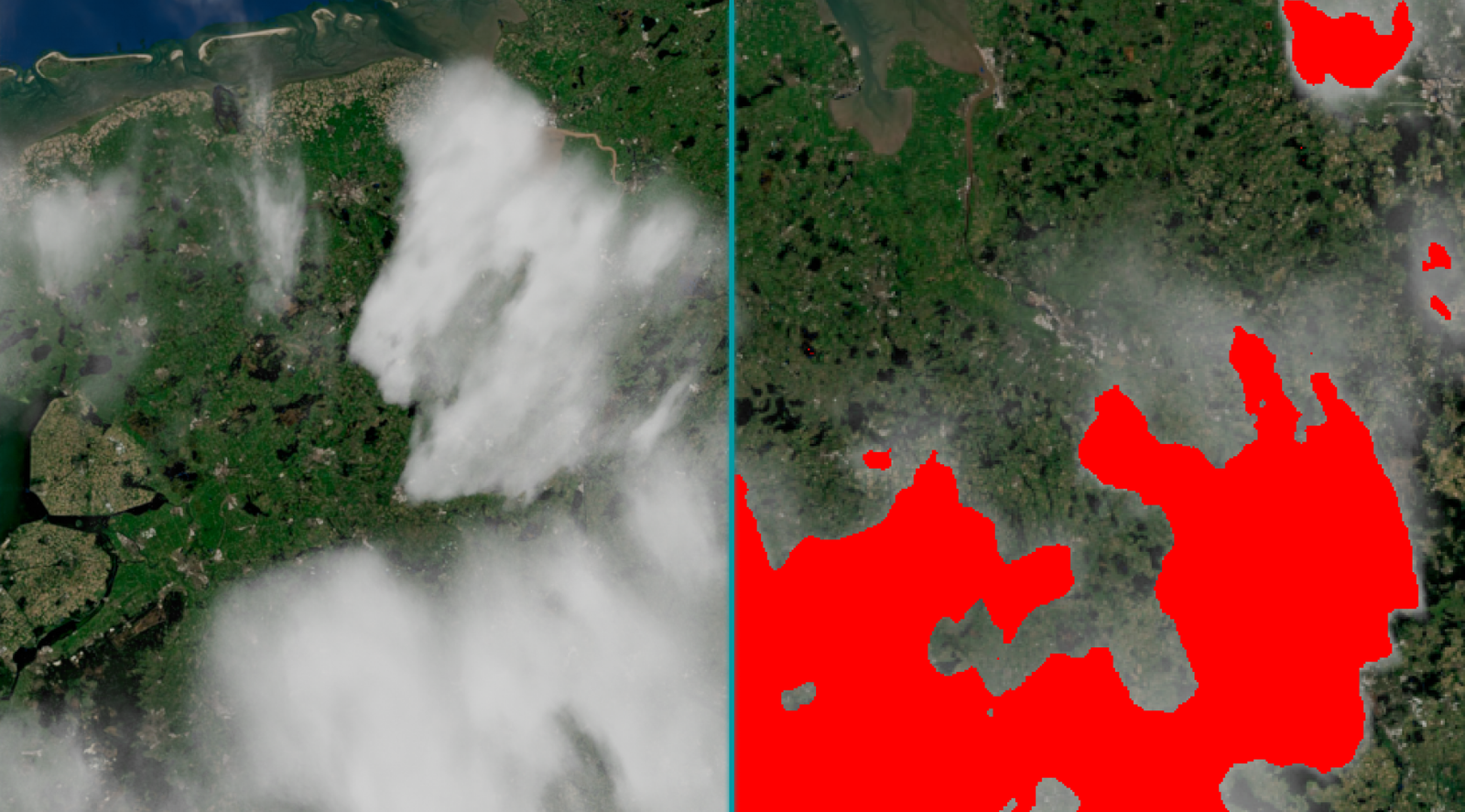
The core performs pixel-level cloud segmentation directly on incoming imagery, classifying each frame onboard rather than sending raw data to the ground first. This is the same class of onboard object detection and segmentation technology we build for satellite missions, where processing data in place reduces downlink volume and lets a spacecraft act on what it sees in real time.
INTEGRATION AND LIVE SEGMENTATION IN FLIGHT
The UML team integrated our IP core into a balloon gondola fitted with a downward-facing telescope camera. During flight, the camera fed live imagery into an AMD Zynq UltraScale+ FPGA running our core, which segmented clouds across the data stream in real time. Running live inference on a moving platform, on real sensor data and under flight conditions, is the kind of test that moves a design from the lab bench toward a real mission.
THE CLIC 1 FLIGHT
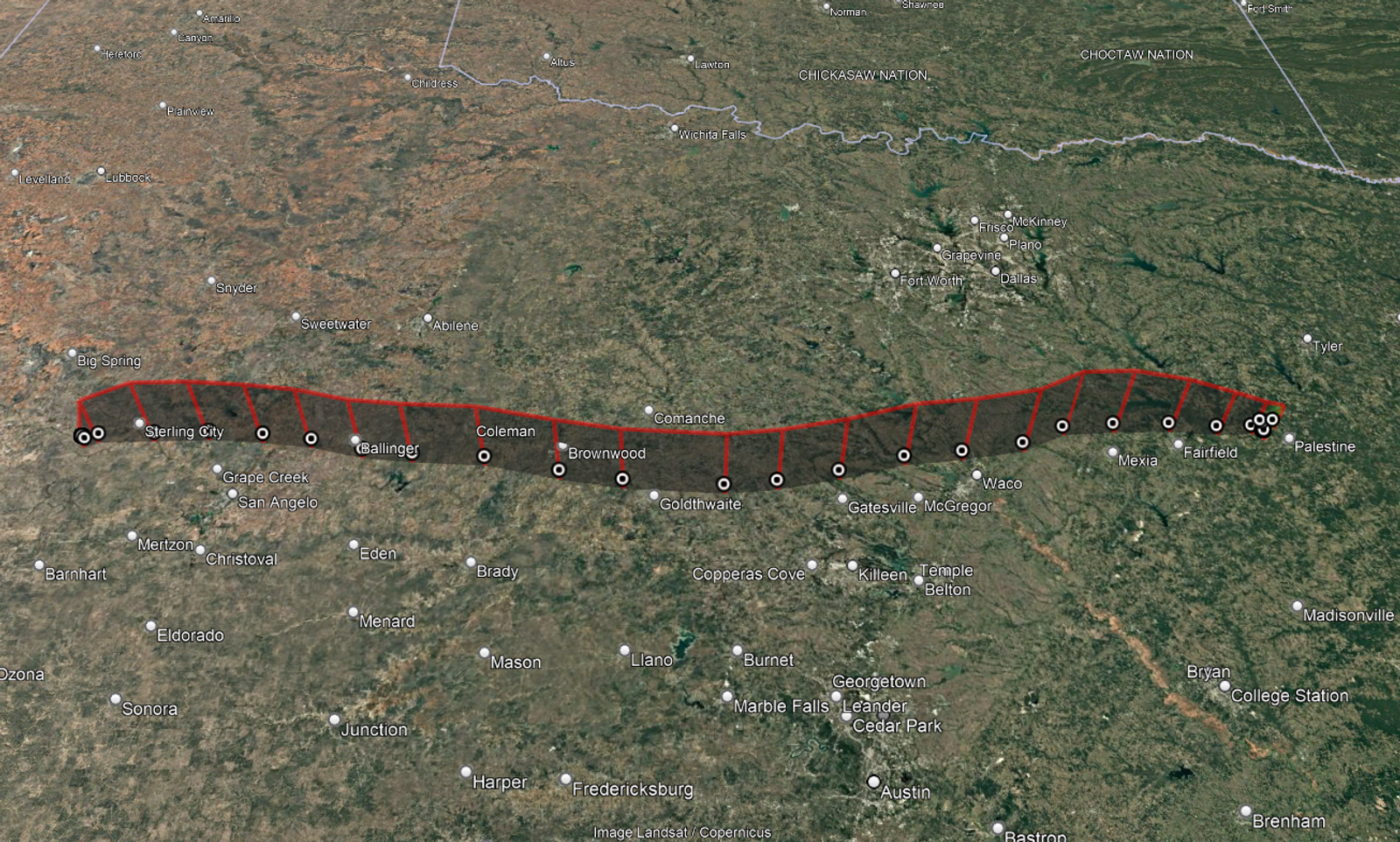
CLIC 1 launched from Palestine, Texas, and was operated by NASA's Columbia Scientific Balloon Facility (CSBF), the NASA facility responsible for launching, tracking, and recovering high-altitude research balloons for NASA centers and universities around the world.
The balloon climbed to an altitude of 38.6 km (about 126,600 feet) and stayed aloft for more than six hours, tracking west across Texas through an area with heavy cloud cover. For a cloud segmentation payload, those were close to ideal conditions: hours of varied, real-world imagery at the top of the stratosphere, where the thin atmosphere and thermal extremes begin to resemble the environment our hardware is ultimately built for.
WHAT THIS MILESTONE MEANS
Flights like CLIC 1 matter to us for two reasons. First, they validate our onboard data processing under the harsh conditions of high-altitude flight, a meaningful step on the path toward orbital deployment. Second, they prove out our collaboration with UML, turning a new partnership into a working payload in a matter of months.
WHAT'S NEXT
The gondola data is still on its way back to us. Over the coming days we will analyze the recorded imagery and segmentation output to measure how the core performed across the full flight, and we will share what we learn as the results come in.
To read more about the technology behind CLIC 1, see our Object Detection and Segmentation IP cores at protostar.ai/object-segmentation and ProtoSDK at protostar.ai/protosdk.