Smart Systems for Space Missions
At Protostar Labs, we build flight-proven onboard data processing systems and optical payloads for satellites and space missions. Our technologies are designed for real-time processing, edge intelligence, and mission-critical reliability — tested in orbit, ready for your next launch.
Clients & Partners




Introduction
Space demands more than innovation — it demands systems that perform flawlessly under extreme conditions. At Protostar Labs, we design and deliver flight-proven technologies built for the rigors of orbit.
From AI-powered processing and optical systems to custom electronics, our technologies deliver autonomy, intelligence, and resilience across every phase of your mission — from concept to launch.
2021
First ESA Contract
24
Engineers & Scientists
4
Active Missions
Expertise
We design and deliver mission-ready technologies for the space environment. From early mission planning to in-orbit execution, our systems are built for performance, autonomy, and reliability.
On-board Data Processing
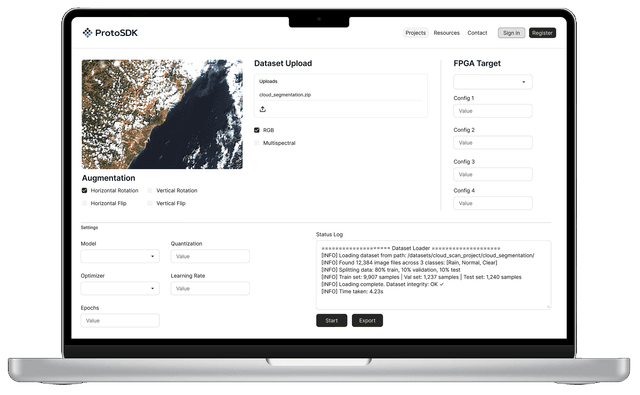
We design systems that analyze data in orbit using AI and machine learning — reducing reliance on ground stations and enabling real-time decision-making.
Optical Payloads
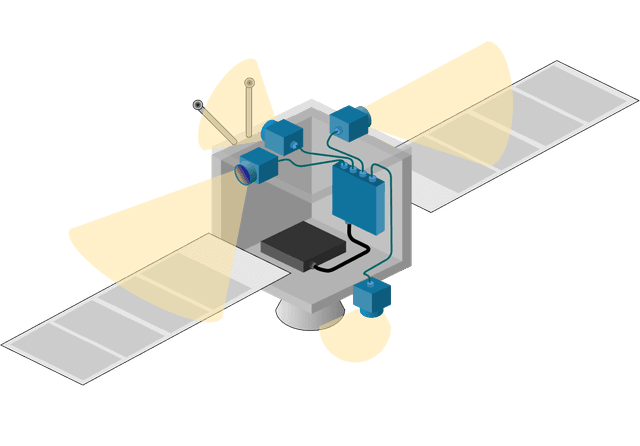
We build compact, high-performance optical and multispectral imaging systems for Earth observation, scientific exploration, and in-orbit sensing.
Edge AI
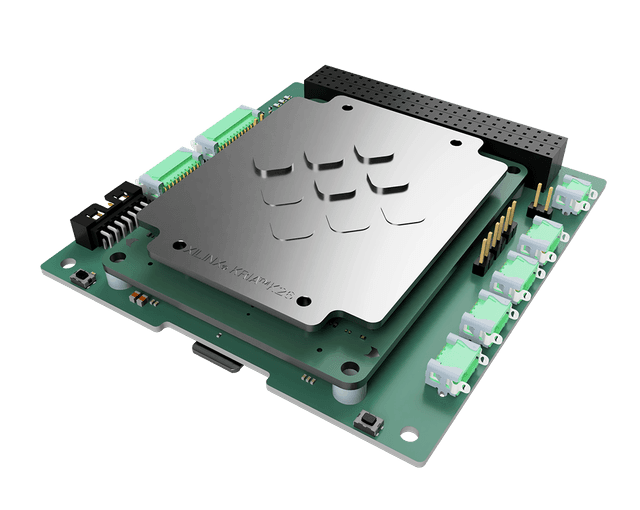
Using FPGAs and low-power compute platforms, we deploy AI models that operate reliably in space, delivering fast, efficient, and autonomous analysis.
Space Missions
May, 2024
ESA OPS-SAT
On-orbit FPGA anomaly detection and telemetry analysis.
2029+
Light Pollution Characterization Module (LPCM)
Low-cost multispectral Earth observation for light pollution.
TBD
ChROmosphere Monitoring InStrument (CROMIS)
H-alpha space solar telescope
Launch Date
May, 2024
Payload
Software-defined payload running on the OPS-SAT Intel Cyclone V FPGA, enabling real-time telemetry analysis, anomaly detection, and dynamic FPGA reconfiguration in orbit.
Goal
To demonstrate real-time onboard anomaly detection and in-orbit FPGA reconfiguration using the OPS-SAT platform, validating faster fault detection directly in orbit
Description
The goal of this project was to port our proprietary algorithms for anomaly detection to the onboard FPGA and run the algorithms on the OPS-SAT telemetry data. OPS-SAT was intended for use as a flying laboratory, carrying various instruments and onboard computing resources, namely the FPGA board. The intention was to enable various experiments in orbit for diverse use cases and to achieve first-flight heritage. This enables easier access into the space industry where the motto was: “Has never flown, will never fly!”. OPS-SAT aims to change that!
Collaborators

Applications

Earth Observation
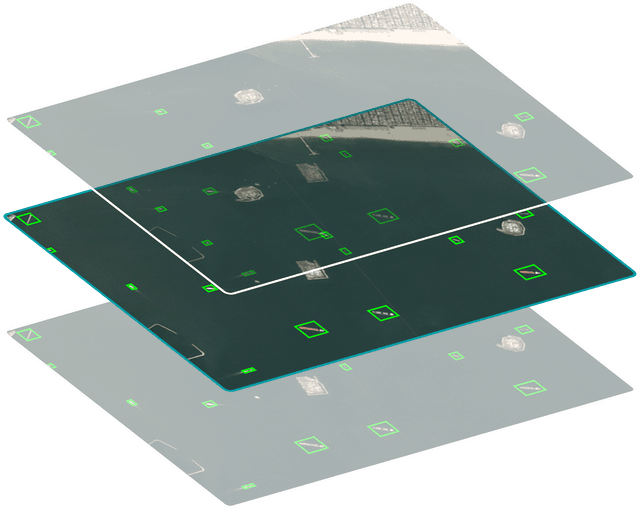
Imaging, spectral analysis, and real-time geospatial intelligence.

Autonomous Satellites
Onboard processing, anomaly detection, and in-orbit decision-making.

Space Situational Awareness
Object tracking, orbital monitoring, and collision avoidance.
Scientific Missions
Compact optical systems and onboard AI for space research.